
truckload
Full Truckload
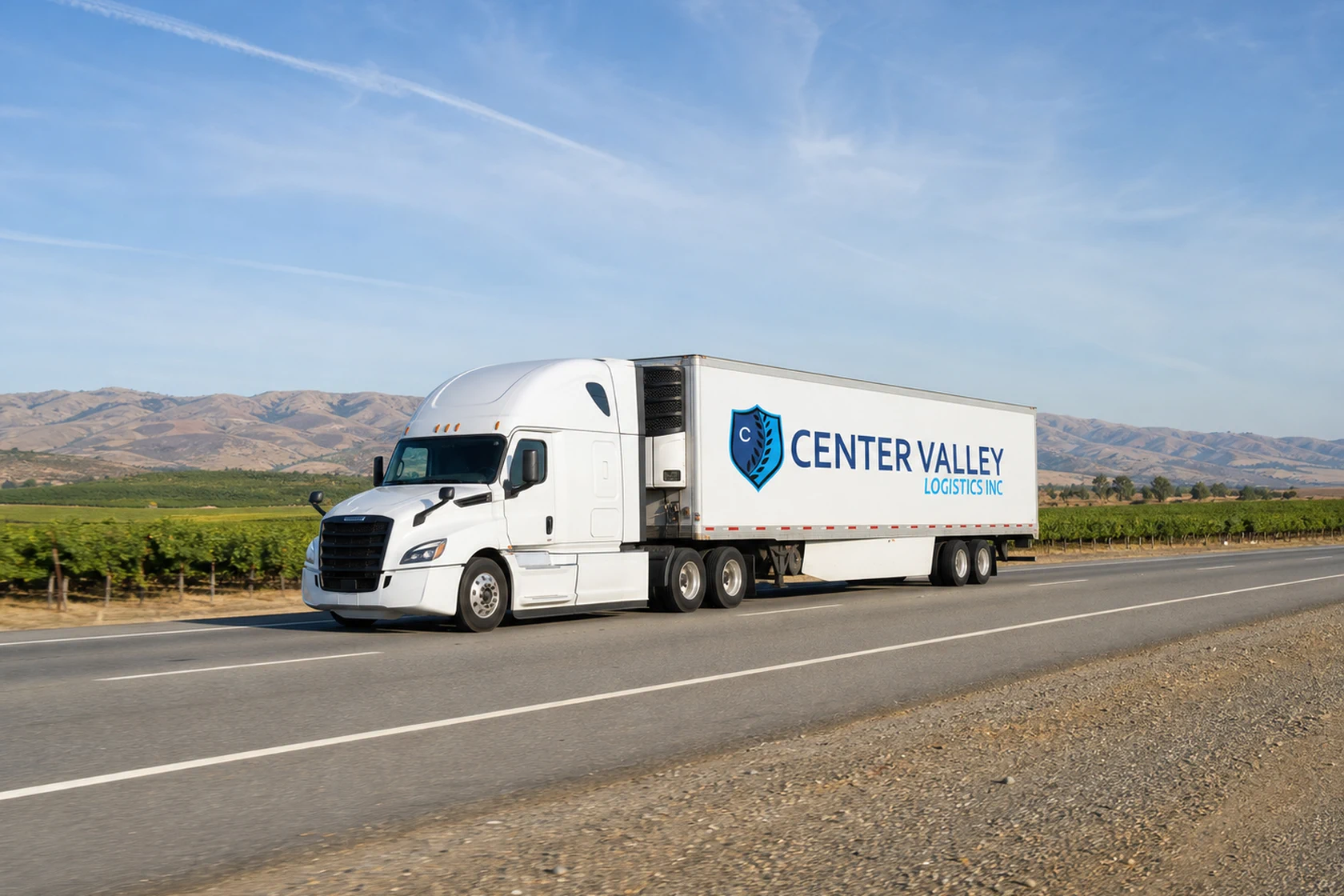
Dedicated trailer capacity for shipments that need direct routing, clear equipment fit, and appointment control.
Transportation services
Center Valley Logistics coordinates ocean, truckload, LTL, reefer, produce, frozen, fresh food, drayage, and cross-border freight. The service starts by defining what the shipment requires, then aligning mode, equipment, timing, and handoffs.
Operating model
Asset-based transportation
Headquarters
Bakersfield, California
Ocean authority
FMC-licensed NVOCC
NVOCC license
NVOCC License 033142N
Truckload and LTL
Full truckload gives a shipment dedicated trailer space and a more direct movement. LTL can fit smaller palletized freight when routing, transfers, class, density, and accessorial needs are defined clearly.
Dedicated trailer capacity for shipments that need direct routing, clear equipment fit, and appointment control.
Cost-conscious routing for smaller palletized shipments that do not require a full trailer.
Dry van capacity for non-temperature-controlled freight that benefits from dedicated trailer space and direct routing.
Open-deck coordination based on dimensions, weight, securement requirements, loading method, and route constraints.
Reefer and food logistics
A reefer trailer is only one part of the plan. Product condition, written temperature instructions, packaging, loading timing, transit profile, and receiver appointments all need to align.
Refrigerated capacity coordinated around product condition, written temperature instructions, and appointment timing.
Origin-aware reefer planning for commodity-sensitive produce, seasonal pressure, and receiver appointments.
Frozen-load coordination built around loading condition, reefer instructions, transit time, and delivery requirements.
Time-sensitive refrigerated planning for fresh food moving into grocery, retail, and foodservice networks.
Shipment-specific planning for chilled, refrigerated, or frozen meat and poultry freight.
Complex and coordinated freight
CVL provides licensed NVOCC ocean freight and coordinates inland transportation where a shipment includes drayage, border activity, warehousing, transloading, air, or intermodal requirements.
Container movement coordination connecting ports or rail ramps with warehouses, transload facilities, and final delivery points.
FMC-licensed NVOCC service for FCL, LCL, import, and export shipments with coordinated inland handoffs.
Partner-supported planning for time-sensitive freight that may require air transportation and coordinated ground handling.
Rail and truck coordination for lanes where transit profile, container availability, and drayage handoffs align.
Mexico freight coordination covering pickup, border timing, documentation handoffs, customs roles, and final delivery.
Canada freight planning centered on transportation handoffs, documentation readiness, border timing, and delivery requirements.
Partner-supported coordination for temporary storage, cross-dock, transload, consolidation, and freight-rework needs.
Shipment coordination with the shipper and its licensed customs provider so documents, timing, and handoffs stay aligned.
Service discipline
The details below reduce avoidable handoff gaps and make the quote more meaningful.
Define shipment size, trailer type, temperature needs, loading method, and any accessorial requirements.
Confirm exact origin, destination, pickup readiness, transit expectations, and delivery appointment rules.
Document commodity, packaging, weight, dimensions, declared handling needs, and special instructions.
Identify the shipper, receiver, customs, port, warehouse, or partner contacts responsible at each point.
Freight fit
A focused transportation recommendation considers the tradeoffs rather than forcing freight into a generic mode.
Use full truckload when trailer control, direct routing, shipment size, or handling sensitivity makes shared capacity a poor fit.
Use LTL when a smaller palletized shipment can tolerate terminal handling and the class, density, and accessorial details are known.
Use reefer equipment when the shipper specifies active temperature control or a product condition that requires it.
Evaluate flatbed or specialized equipment when dimensions, loading method, securement, or route restrictions rule out enclosed trailers.
Consider rail and drayage when lane length, transit flexibility, container availability, and terminal handoffs support the move.
Use CVL's licensed NVOCC service for ocean freight, and define provider roles clearly for customs, air, warehousing, or other specialized work.
Quote your next shipment
Share the lane, dates, commodity, weight, equipment, temperature instructions, and appointment requirements so the team can evaluate the move.