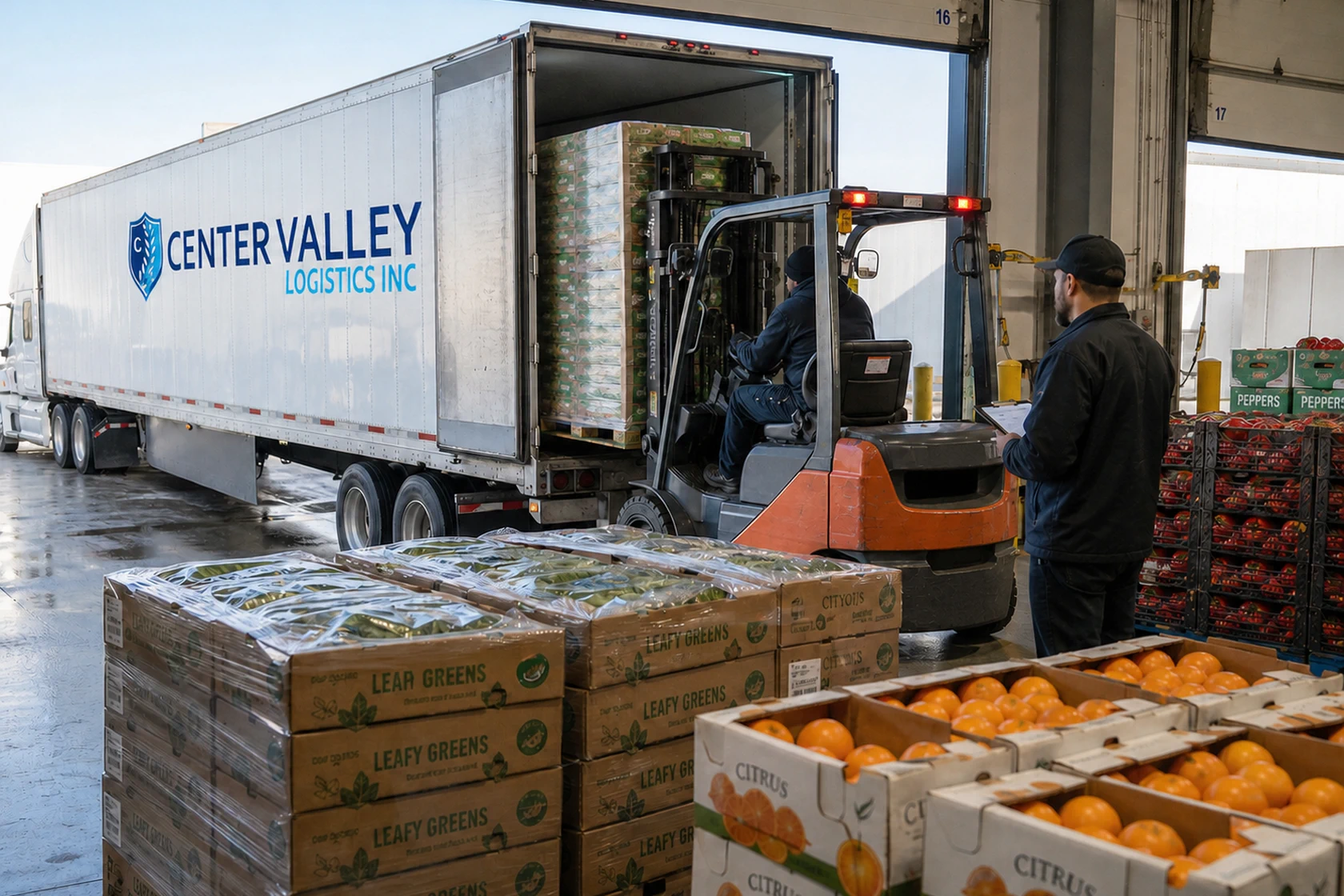
Center Valley Logistics refrigerated tractor-trailer with organized fresh produce and route-planning graphics

Produce freight logistics

Fresh freight, coordinated from origin to receiver.

Center Valley Logistics coordinates produce transportation around the condition of the load: commodity, packaging, trailer instructions, origin readiness, transit timing, and the receiver appointment.

  • Origin-to-receiver planning
  • Commodity-specific load details
  • Appointment-driven coordination
Produce logistics team reviewing pallet details as a refrigerated trailer is loaded at a distribution facility

Start with the load condition

Build the shipment plan before capacity is assigned.

Produce freight changes with the product, the packing plan, origin readiness, equipment instructions, loading sequence, transit window, and receiver schedule. A complete freight profile gives the shipper, carrier, and receiver the same operating picture before dispatch.

  • Record the commodity, packaging, pallet count, gross weight, and loading condition
  • Set the pickup window, equipment, requested setpoint, and shipper-provided pre-cooling instructions
  • Name each stop, handoff, appointment, and exception contact before dispatch

From packing floor to final dock

Make every produce handoff easy to read.

A well-defined load gives every party the context needed to plan the next handoff without guessing at the product, timing, or receiving requirements.

Fresh produce staged in organized outbound lanes at a refrigerated distribution center

The shipment plan should keep the product profile, pickup timing, trailer requirements, delivery appointment, and the responsible contacts visible from origin through delivery.

Load profile
Commodity, packaging, pallet configuration, weight, and loading condition.
Movement plan
Pickup readiness, stop sequence, transit expectations, equipment, and required handoffs.
Receiver plan
Appointment, delivery references, check-in requirements, and exception contacts.

Origin and destination markets

Regional context changes the freight plan.

Origin schedules, seasonal volume, loading practices, distance to market, border activity, and receiver expectations vary by region. Use these guides to prepare current origin, commodity, equipment, and appointment details for quoting.

origin

California Produce Freight

Reefer planning for California origin markets where commodity timing, pickup windows, and receiver appointments shape the load.

leafy greensberriescitrusstone fruit

origin

Arizona Produce Freight

Produce freight coordination for Arizona origin markets, seasonal capacity pressure, and appointment-sensitive delivery.

leafy greensmelonsmixed produce

origin

Pacific Northwest Produce Freight

Origin planning for apples, potatoes, onions, berries, and mixed produce from Washington, Oregon, and Idaho.

applespotatoesonionsberries

cross border

Mexico Produce Freight

Cross-border produce coordination connecting origin pickup, border handoffs, customs roles, reefer requirements, and delivery timing.

avocadostomatoesberriespeppers

destination market

Northeast Receiver Markets

Long-haul produce planning focused on transit time, receiver rules, appointment windows, and urban delivery constraints.

mixed producefresh foodgrocery distribution

destination market

Southeast Receiver Markets

Produce and fresh-food planning for distribution networks with appointment, timing, and multi-stop requirements.

mixed producefoodservicegrocery distribution

Commodity planning

Commodity details determine how the load should be discussed.

Produce is not one freight profile. Packaging, density, sensitivity, loading condition, temperature instructions, compatibility, and shelf-life pressure can change by commodity and shipment.

Potatoes

Dense, high-cube produce freight where packaging, weight, ventilation, and origin timing affect the trailer plan.

Onions

Produce freight planned around packaging, ventilation, loading condition, timing, and receiver requirements.

Apples

Origin-sensitive produce freight where packaging, loading condition, equipment, and appointment timing matter.

Grapes

Time-sensitive produce freight coordinated around packaging, cooling instructions, pickup readiness, and transit time.

Lettuce

Refrigerated produce planning for highly perishable loads with tight pickup and receiver windows.

Leafy Greens

Reefer planning for sensitive produce where cooling instructions, loading timing, and appointment discipline are critical.

Berries

High-sensitivity produce freight that benefits from tight origin, transit, and receiver coordination.

Strawberries

Time-sensitive reefer planning centered on loading condition, packaging, transit time, and receiving windows.

Citrus

Produce freight coordinated around origin readiness, packaging, equipment requirements, and market timing.

Melons

Seasonal produce planning based on origin timing, packaging, loading condition, weight, and receiver appointments.

Tomatoes

Produce logistics that account for product condition, packaging, temperature instructions, and transit timing.

Peppers

Refrigerated produce planning around packaging, sensitivity, origin schedules, and receiver requirements.

Cucumbers

Commodity-specific produce coordination for loading condition, equipment, timing, and delivery expectations.

Broccoli

Reefer planning for sensitive produce with clear temperature instructions, loading timing, and receiver appointments.

Cauliflower

Temperature-sensitive produce coordination from pickup readiness through appointment delivery.

Carrots

Produce freight planning based on packaging, weight, loading condition, equipment, and receiver requirements.

Celery

Refrigerated produce logistics with close attention to loading condition, timing, and appointment windows.

Avocados

Product-condition and timing-sensitive produce freight, including cross-border handoffs where applicable.

Stone Fruit

Seasonal produce coordination around ripeness, packaging, cooling instructions, transit time, and receiver windows.

Cherries

Short-season, time-sensitive reefer freight requiring precise pickup and delivery coordination.

Mushrooms

Highly time-sensitive refrigerated planning centered on loading condition, packaging, transit, and appointments.

Herbs

Lightweight, sensitive produce freight where packaging, handling, temperature instructions, and timing all matter.

Organic Produce

Commodity-specific produce planning with shipment documentation, handling instructions, and receiver requirements clearly defined.

Mixed Produce Loads

Multi-commodity planning that reconciles compatibility, stop sequence, temperature instructions, and receiver timing.

From origin to receiver

Four checkpoints for a stronger produce movement.

The specific instructions still come from the shipper and receiver; CVL uses them to coordinate the freight plan.

  1. 01

    Pickup readiness

    Confirm product availability, loading location, pickup window, packaging, pallet count, weight, and whether the product is ready for transport.

  2. 02

    Reefer instructions

    Record requested setpoint, loading condition, pre-cooling instructions, and any requirements provided by the shipper.

  3. 03

    Route and stops

    Build the sequence around multi-pick or multi-drop activity, transit time, border or facility handoffs, and hours of operation.

  4. 04

    Receiver requirements

    Confirm appointment, check-in process, delivery references, lumper or accessorial expectations, and exception contacts.

Where produce freight gets difficult

Keep the operating plan useful when conditions change.

Origin, transit, and receiving conditions do not always stay aligned. Clear shipment details make the next decision easier to coordinate.

01

Origin delays

Packing or loading delays can compress transit and appointment windows. Early notice gives the team more options to coordinate the next step.

02

Capacity pressure

Seasonal demand can tighten refrigerated capacity. Complete shipment details improve carrier fit and reduce avoidable rework.

03

Mixed commodity loads

Compatibility, stop sequence, temperature instructions, and packaging need to be reconciled before unlike products share a trailer.

04

Multi-stop routing

Pickup and delivery order affects miles, transit time, product exposure, appointment feasibility, and driver hours.

05

Border handoffs

Mexico produce requires customs roles, documents, transfer points, carrier responsibilities, and timing to be explicit.

06

Receiver appointments

Grocery, retail, terminal market, and foodservice receivers may have strict check-in, reference, and appointment procedures.

Plan the next produce load

Share the commodity, lane, timing, and reefer instructions.

A focused produce quote starts with origin, destination, pickup readiness, appointment, product, packaging, weight, equipment, and temperature details.

Freight request

Start with the shipment basics.

Share the shipment basics now. The completed request is sent directly to Center Valley Logistics.

Provide an email address so the team can respond.

Your request will be sent to CVL operations.